Thomas Peattie
The relationship between Gustav Mahler’s career as a conductor and his symphonic writing has remained largely unexplored territory with respect to his provocative re-invention of the Austro-German symphony at the turn of the twentieth century.
This study offers a new account of these works by allowing Mahler’s decisive contribution to the genre to emerge in light of his sustained engagement with the musical, theatrical, and aesthetic traditions of the Austrian fin de siècle.
Appealing to ideas of landscape, mobility, and theatricality, Thomas Peattie elaborates a richly interdisciplinary framework that draws attention to the composer’s unique symphonic idiom in terms of its radical attitude toward the presentation and ordering of musical events.
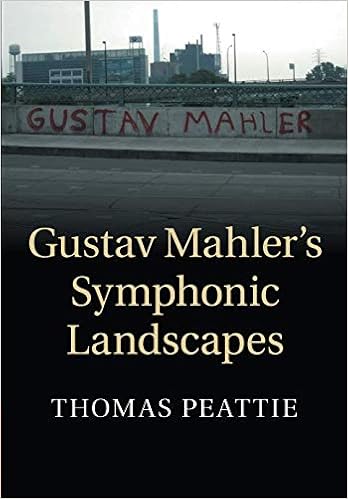 The identification of a fundamental tension between the music’s episodic nature and its often-noted narrative impulse in turn suggests a highly original symphonic dramaturgy, one that is ultimately characterized by an abstract theatricality.