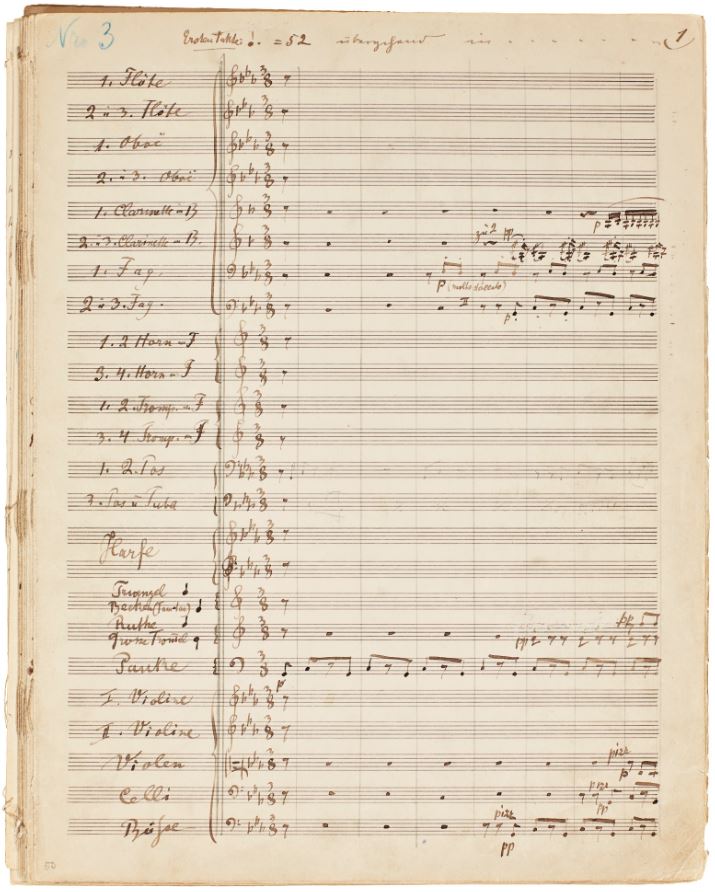
Scherzo bases on Gustav Mahlers’ Lied 6: Des Antonius von Padua Fischpredigt (Des Knaben Wunderhorn, 1892-1898). See Arnold Bocklin (1827-1901).
With a gently flowing movement. The tragic, or at least pessimistic, conception of this symphonic Scherzo seems worlds away from the humour of the Wunderhorn song in which St. Anthony preaches to the fishes, who understand nothing of his sermon and look on with a glazed expression. Yet they are sister works that use identical musical material.
Two timpani strokes, dominant-tonic, unleash the Scherzo’s “senseless agitation”, an uninterrupted and intentionally monotonous double ostinato in the treble and bass. The bulk of the material in the Trio in C major is likewise borrowed from the song. At the end of the movement, the “cry of despair” alluded to in the symphony’s programme is heard in a vast B flat minor climactic tutti.
Movement 3: In ruhig fliessender Bewegung.
Embrace Everything
Listening Guide