
Constantin Floros
With his extensive three-volume investigation, the author has newly drawn the image of Gustav Mahler for our time. Should Mahler’s symphonies really be categorized as absolute music?
Little-known manuscript sources contain significant hints to the contrary: programmatic titles and catchwords or phrases, mottos, literary allusions, associations, sighs, exclamations. Mahler fully understood his symphonies as release Musik, the music of experience, as autobiography in notes, and as expressions of his «weltanschauung». All the symphonies, including the purely instrumental ones, can be traced back to programs that Mahler originally made public, but suppressed later on.
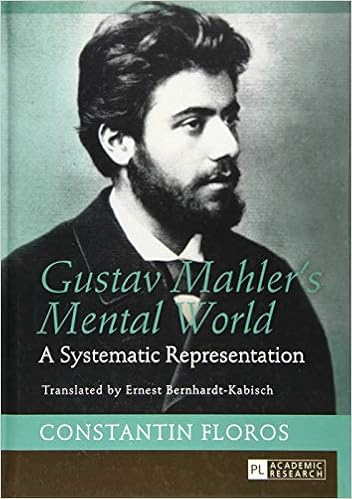 Knowledge of the programmatic ideas provides access to a hitherto barely sensed interior metaphysical world that is of crucial importance for an adequate interpretation of the works.
This first volume uncovers the complexity of relations between Mahler’s wide-ranging reading and education, his aesthetics, and his symphonic creation.