Lied 5: Das irdische Leben
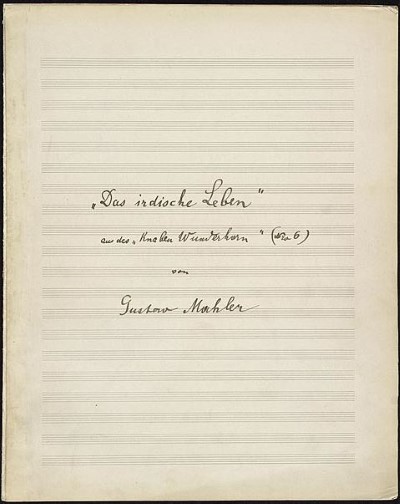
Das irdische Leben is a grim little piece, perhaps providing the negative counterpart to Das himmlische Leben, the song that became the finale of the Fourth Symphony. The music is of a decidedly eerie nature, employing divided strings in a quiet perpetual motion. Some of the string parts play pizzicato figures along with woodwind interjections […]
Lied 4: Wer hat dies Liedlein erdacht?
Wer hat dies Liedlein erdacht? is another pastoral setting and, as Verlorene Müh’; it is in 3/8 meter. It is a typical rustic scene involving admiration of an innkeeper’s daughter living on a hill. The song is reflexive however, and ends by asking the question of who came up with this little ditty. The outward […]
Lied 3: Trost im Ungluck
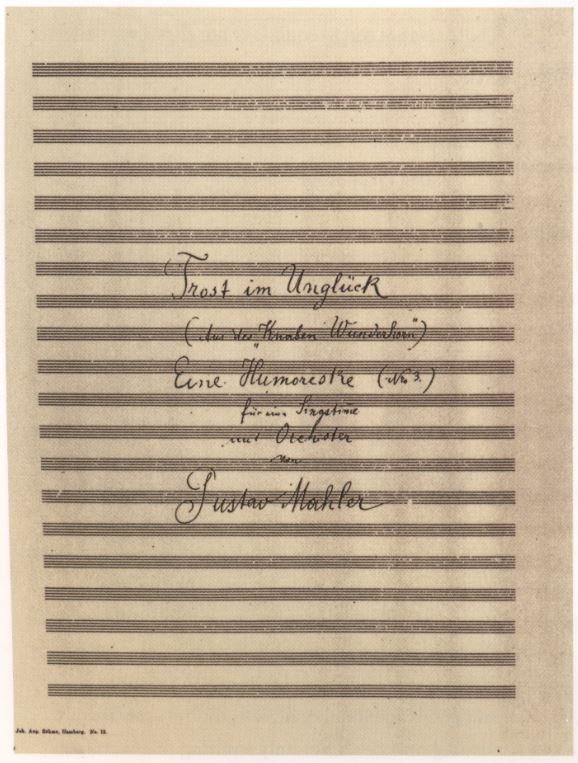
Trost im Unglück describes the feelings of somebody trying to move past a lost or rejected love, comforting himself with the assurance that he loved her out of foolishness and can live without her. Year 1892. Lied 3: Trost im Ungluck. ‘Trost im Ungluck (aus der “Knaben Wunderhorn”). Eine Humoreske (No. 3) fur Singstimme mit Orchester […]
Lied 2: Verlor’ne Muh!
Verlorene Müh’ is another dialogue song, and it is in the distinctive Swabian dialect. It is a sort of fruitless serenade in a playful 3/8 rhythm. It is quite similar to the famous song by Brahms called Vergebliches Ständchen, but with a reversal of gender roles. The foolish girl makes numerous attempts to entice a […]
Lied 1: Der Schildwache Nachtlied
Der Schildwache Nachtlied is a complex military-style song with trumpet calls and drum rolls, but it is also a dialogue song. The sentinel’s defiant rejection of joy and love is three times interrupted by more tender music setting words of his beloved. He rejects these, becoming more defiant and firm, building to an actual sentinel’s […]
Introduction Des Knaben Wunderhorn, 12 songs

Ludwig Achim von Arnim (1781-1831). Clemens Brentano (1778-1842). Mahler set a total of fourteen large-scale songs with orchestral accompaniment to texts from the folk collection Des Knaben Wunderhorn. Lied 11: Urlicht was rapidly incorporated (with expanded orchestration) into the 2nd Symphony (1888–1894) as the work’s fourth movement. Lied 12: Es sungen drei Engel einen Sussen Gesang, […]